Voices Against the Tide: The Urgent Work of Capturing Ogunquit's Living Memory
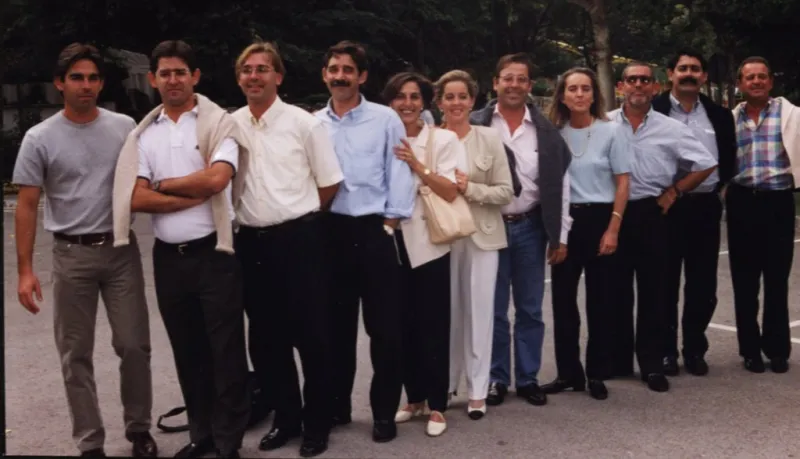
Photo: elderly person being interviewed oral history archive recording Maine, via photos1.blogger.com
Every town has two histories. The first is the official record — the deeds, the census rolls, the newspaper accounts, the photographs filed in archive boxes. The second is carried in human memory: the stories told on front porches, at kitchen tables, and in the back rooms of old establishments by people who were present when the events in question actually occurred. In Ogunquit, Maine, the gap between these two histories has long been significant. And for a growing community of local historians, closing that gap has become a matter of considerable urgency.
The reasons for that urgency are not difficult to understand. The residents who remember Ogunquit as a working fishing village — who knew the lobstermen by name, who watched the artist colony flourish on the hillsides above the shore, who witnessed the gradual transformation of a self-sufficient coastal community into one of New England's most visited summer destinations — are aging. Their memories, irreplaceable by any other source, are at risk of disappearing entirely.
What Documents Cannot Capture
Formal archives tell us a great deal about Ogunquit's past. Property records document the gradual shift in land use from maritime and agricultural purposes toward tourism and hospitality. Newspaper archives preserve accounts of notable events, local politics, and the comings and goings of prominent summer visitors. Photographs offer visual evidence of how the town's built environment changed across decades.
What these sources cannot convey, however, is the texture of daily life — the sensory experience of a town that smelled of salt and fish and woodsmoke, the social dynamics of a small community where everyone knew everyone else's business, the particular quality of belonging that long-term residents describe when they speak of Ogunquit before the era of mass tourism.
Oral history fills these gaps in ways that no written record can replicate. When an elderly lobsterman describes the pre-dawn rhythms of a working waterfront, or when a descendant of one of the founding families recounts the stories her grandmother told about the early artist colony, something essential about the community's past becomes accessible in a way it simply is not through documentary sources alone.
This is precisely why the Ogunquit Heritage Museum has made oral history collection a central component of its preservation mission. The museum recognizes that the community's most irreplaceable historical assets are not objects or documents but people — and that the window for capturing their testimony grows narrower with each passing year.
The Collectors of Memory
The individuals doing this work in Ogunquit represent a diverse coalition. Professional archivists and historians bring methodological rigor to the process, ensuring that recorded interviews are properly documented, transcribed, and catalogued for future research. Local volunteers — many of them longtime residents with deep personal connections to the community — contribute an intimacy and contextual knowledge that no outside researcher could replicate. Together, these groups form the informal network that is slowly but systematically building a comprehensive oral record of the town's twentieth-century history.
The interviews themselves range widely in subject matter. Fishermen and lobstermen speak of the practical realities of maritime labor — the economics of the catch, the hierarchy of the waterfront, the ways in which fishing families organized their lives around the tides and seasons. Artists and their descendants describe the creative community that made Ogunquit famous, including the personalities, rivalries, and collaborations that shaped the Ogunquit School of Painting and its legacy. Shop owners, hotel operators, and seasonal workers recall the business of tourism as it developed over the mid-twentieth century, offering ground-level perspectives on a transformation that reshaped the entire character of the town.
Perhaps most valuably, many interviewees speak to the experience of change itself — to what it felt like to watch a place one had always known as home become something different, and to the complicated emotions that accompanied that process. These testimonies are not simply historical data points; they are windows into the human experience of a community in transition.
The Challenges of Preservation in a Tourist Town
Ogunquit's status as a highly desirable destination has created specific complications for historical preservation work. As property values have risen dramatically over recent decades, many families with deep roots in the community have relocated, dispersing across southern Maine and beyond. Tracking down former residents and persuading them to participate in oral history projects requires sustained effort and, often, the assistance of community networks that connect past and present inhabitants.
The pace of physical change in the town also creates challenges. Buildings that once served as landmarks of community memory — the old fish houses along Perkins Cove, the boarding establishments that housed early summer visitors, the modest homes of fishing families — have been converted, renovated, or demolished as the demands of the tourism economy have reshaped the built environment. When the physical context for a memory disappears, the memory itself can become harder to access and harder to communicate to those who did not share it.
Digital technology has emerged as a partial solution to some of these challenges. The Ogunquit Heritage Museum has invested in digital archiving infrastructure that allows recorded oral histories to be stored in formats designed for long-term preservation and broad accessibility. Audio and video recordings, once vulnerable to the degradation of physical media, can now be maintained indefinitely in digital form and made available to researchers and community members through online platforms.
Innovative Approaches to a Timeless Task
Beyond straightforward audio and video recording, oral history practitioners in Ogunquit have experimented with approaches designed to capture memory in richer and more nuanced ways. Walking interviews — conducted on location at sites of personal significance — allow interviewees to connect their narratives directly to the physical landscape, producing accounts that are grounded in place in a way that studio recordings often are not.
Intergenerational interview sessions, in which longtime residents speak with younger community members or students, have proven particularly effective at producing testimonies that are both historically rich and oriented toward the future. When an eighty-year-old lobsterman explains his trade to a twenty-year-old who grew up in the same town, the resulting conversation illuminates both the specificity of the past and the continuities that connect it to the present.
The museum has also worked to integrate oral history materials into its existing exhibitions, allowing visitors to hear directly from the people whose stories the museum seeks to tell. Listening stations, short documentary films, and interactive digital displays have all been employed to present oral history content in formats accessible to a broad public audience.
Why These Voices Matter
At its deepest level, the work of oral history preservation in Ogunquit is an argument about what constitutes the authentic identity of a place. In a town that receives hundreds of thousands of visitors each year, the risk is real that the community's public image — curated for tourism, shaped by commerce, and oriented toward the expectations of outsiders — gradually displaces the more complex, more contradictory, and ultimately more truthful account held in the memories of those who actually lived it.
The Ogunquit Heritage Museum exists, in part, to resist that displacement. By collecting, preserving, and sharing the oral histories of the community's longtime residents, the museum ensures that future generations — whether they are descendants of those residents, scholars of New England history, or simply visitors curious about the real story behind the picturesque surface of this remarkable town — will have access to the full range of voices that shaped Ogunquit's past.
The tide, as any Maine resident knows, is constant in its motion. It takes away and it returns. The work of oral history preservation is, in its own way, an act of retrieval — an effort to bring back to shore the stories that time and change would otherwise carry away for good.