Courage in the Surf: The Forgotten Heroes of Ogunquit's Lifesaving Stations
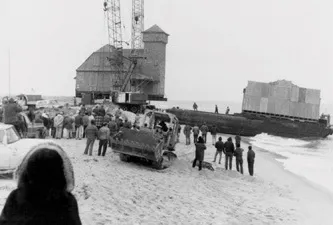
Photo: Unknown, from archives of National Park Service, Public domain, via Wikimedia Commons
The Atlantic Ocean off the coast of southern Maine has never been a forgiving place. Submerged ledges, unpredictable fog banks, and the powerful tidal surges that funnel through the Gulf of Maine have claimed vessels of every size and era. For much of the nineteenth and early twentieth centuries, the men who worked the lifesaving stations along this stretch of coastline stood as the only barrier between catastrophe and survival. Their names rarely appeared in newspaper headlines, and their wages were modest by any measure. Yet the record of their service, carefully documented in the archives now held by the Ogunquit Heritage Museum, constitutes one of the most compelling chapters in the region's maritime heritage.
The Origins of Organized Rescue
The United States Life-Saving Service, established formally by Congress in 1871, grew out of decades of ad hoc rescue efforts that had proven dangerously inconsistent. Prior to the Service's creation, shipwreck survivors along the Maine coast depended largely on the goodwill of local fishermen and the proximity of their vessel to populated shores. The results were predictably uneven. The new federal agency changed that calculus by stationing trained crews at regular intervals along the most hazardous sections of coastline, equipping them with standardized rescue apparatus, and holding them accountable through detailed logbooks and quarterly inspections.
The station that served the Ogunquit area was positioned with deliberate care, situated to provide maximum coverage of the approaches to the Ogunquit River mouth and the exposed beaches stretching north toward Wells. Station keepers were required to submit meticulous records of every patrol, every weather observation, and every rescue attempt, regardless of outcome. Those records, many of which survive in fragile but legible condition, offer a granular portrait of what daily life in this demanding service actually looked like.
Daily Life on the Watch
The rhythm of a lifesaving station was governed entirely by the sea. Surfmen — as the rescue crews were officially designated — stood watches around the clock, walking assigned patrol routes along the beach regardless of weather conditions. In winter, those patrols meant navigating ice-slicked sand in temperatures that frequently fell below zero, carrying a small lantern and a signal flare, scanning the darkness offshore for any sign of a vessel in distress.
Station logs from the Ogunquit area describe conditions that modern readers may find difficult to fully appreciate. One entry from the late 1880s notes, with characteristic understatement, that a patrol was completed during a northeast gale with seas running fifteen feet and visibility reduced to near zero. The surfman on duty reported no vessels observed and returned to station without incident. What the log does not convey is the physical reality of that walk: the wind-driven spray, the footing made treacherous by wet sand and kelp, the isolation of a man alone on a dark beach with the ocean roaring beside him.
When a wreck did occur, the station crew moved with practiced urgency. The Lyle gun — a cannon designed to fire a weighted line over a distressed vessel — was among their primary tools, capable of establishing a connection between shore and ship across several hundred yards of turbulent water. Once a line was secured, a breeches buoy could be rigged to transfer survivors one at a time to the safety of the beach. The procedure required coordination, physical strength, and a thorough familiarity with equipment that could malfunction in the worst possible conditions.
Documented Rescues Along the Ogunquit Shore
The museum's collection includes documentation of several notable rescue operations conducted by crews associated with the southern Maine stations. Among the most frequently cited is an incident involving a two-masted schooner that drove onto the outer bar during a January storm in the 1890s. The crew of seven had been aboard for more than eighteen hours before the lifesaving crew was alerted by a patrol surfman who spotted the vessel's distress signals through breaking surf.
The rescue required multiple attempts with the Lyle gun before a workable line was established. Two surfmen subsequently entered the water to assist a crewman who had become entangled in the breeches buoy rigging. All seven sailors were brought ashore alive. The station keeper's report, written in the measured language required by the Service, notes simply that the rescue was accomplished without loss of life and that the apparatus performed satisfactorily. The human drama behind those words is left entirely to the reader's imagination.
Not every operation ended so favorably. The same archives document several instances in which crews arrived too late, in which equipment failed under extreme stress, or in which the sea simply overwhelmed every effort made against it. Those accounts are recorded with equal precision, and they serve as important reminders that the lifesaving service operated in an environment where outcomes could never be guaranteed.
Women in the Record
While the surfmen who walked the patrols and operated the rescue apparatus were uniformly male during the Service's operational years, the historical record does acknowledge the significant contributions of women connected to the stations. Station keepers' wives frequently served as de facto administrators, managing supply inventories, tending to rescued survivors, and in some documented cases alerting crews to distress signals observed from station windows. Several accounts in the museum's holdings describe women providing immediate medical care to hypothermic sailors in the hours following a rescue, a role that was essential but rarely formally recognized.
The Ogunquit Heritage Museum has made a deliberate effort in recent years to surface these contributions through its interpretive programming, drawing on letters, household accounts, and oral history recordings to construct a more complete picture of station life.
What the Artifacts Reveal
Beyond the written record, the physical objects associated with Ogunquit's lifesaving heritage offer their own form of testimony. The museum's maritime collection includes examples of rescue equipment, personal effects belonging to former surfmen, and photographic documentation of station facilities that no longer stand. Each object carries the weight of its context: a worn leather boot, a hand-sewn log cover, a photograph of a crew assembled in formal dress for an inspection that may have occurred days before a deadly storm.
These artifacts are not merely historical curiosities. They are the tangible residue of a service culture built on discipline, mutual reliance, and a shared understanding that the sea demanded absolute respect. Visitors to the museum who engage with this collection frequently remark on the immediacy the objects convey — the sense that the men who used these tools were not distant historical figures but recognizable human beings who faced extraordinary circumstances with ordinary means.
A Legacy Worth Preserving
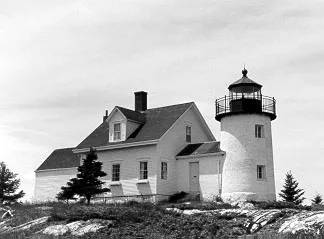
The United States Life-Saving Service was absorbed into the newly formed Coast Guard in 1915, and the station network along the Maine coast was gradually consolidated and modernized in the decades that followed. The physical structures that once housed these crews have largely disappeared, claimed by erosion, development, and the indifference of time. What remains exists primarily in the form of documents, photographs, and the objects that institutions like the Ogunquit Heritage Museum have worked to preserve and interpret.
The story of Ogunquit's lifesaving station crews is, at its core, a story about the relationship between a community and the ocean that defines it. These were not soldiers or celebrated explorers. They were local men — and the women who supported them — who understood the sea in an intimate and unromantic way, and who chose, season after season, to stand between its power and those who ventured onto it unprepared. That choice, repeated across decades of storms and rescues and long cold patrols, constitutes a form of heroism that deserves to be remembered.