Votes, Visions, and Visitor Dollars: The Political Transformation of Ogunquit Through a Century of Tourism
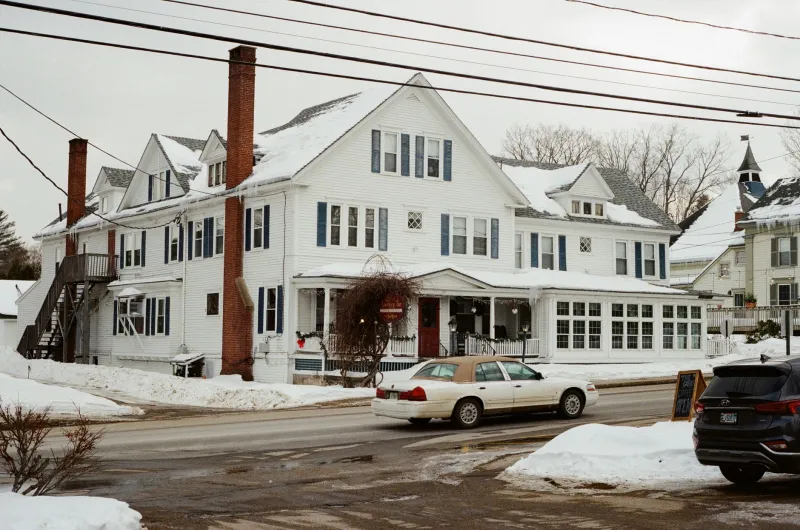
In the summer months, Ogunquit's population swells dramatically. Sidewalks that stand nearly empty on a February morning become rivers of movement by the Fourth of July. Hotels fill, restaurants turn tables three times an evening, and the narrow roads threading through the village hum with unfamiliar license plates from Connecticut, Massachusetts, and beyond. Then, as reliably as the tides, the visitors recede—and the town is left to govern itself.
This seasonal rhythm has never been merely atmospheric. For well over a century, the ebb and flow of Ogunquit's visitor economy has shaped not only its streetscapes but also its political culture, its municipal priorities, and the often uncomfortable negotiations between those who profit from tourism and those who simply wish to live quietly beside the sea.
The First Fault Lines: Early 20th-Century Growth and Its Discontents
Ogunquit's emergence as a summer destination accelerated in the decades following the Civil War, when improved rail connections made the Maine coast newly accessible to urban New Englanders seeking respite from city heat. By the early 1900s, boarding houses had given way to proper hotels, and the village's character was already in flux.
Archival records held in the museum's collection reveal that local selectmen were fielding competing demands almost from the outset. Longtime fishing families and small-scale farmers sought roads maintained for year-round practicality. Hoteliers and shopkeepers catering to summer guests lobbied for improvements to Ogunquit's central promenade, better signage, and expanded docking facilities. These were not merely logistical disagreements—they were early expressions of a civic identity still being negotiated.
Municipal meeting minutes from the 1910s and 1920s document recurring debates over road widening, the placement of public conveniences, and the licensing of new commercial establishments. In nearly every instance, the seasonal economy cast a long shadow over the discussion. The question was rarely stated so baldly, but it lingered beneath the surface: should the town be managed in the interest of those who lived there year-round, or optimized for the visitors whose spending underwrote an ever-larger share of local revenue?
Preservation Versus Progress: A Tension That Refused to Resolve
The mid-twentieth century brought new urgency to these questions. As automobile travel democratized access to the Maine coast, Ogunquit attracted a broader and more diverse tourist clientele. Roadside businesses multiplied. Pressure mounted to expand parking, widen thoroughfares, and accommodate the logistical demands of a car-centered tourism economy.
It was during this period that a countervailing impulse began to organize itself politically. A coalition of year-round residents, joined by artists, academics, and seasonal residents with deep community ties, began advocating for what might today be called heritage preservation. They argued, with increasing sophistication, that Ogunquit's commercial appeal was rooted in precisely the qualities that unchecked development threatened to erase: its intimate scale, its architectural character, the visual drama of its unspoiled shoreline.
This argument proved surprisingly persuasive in local politics. Ogunquit incorporated as an independent town in 1980, separating from Wells, and the move was understood by many participants as a deliberate act of self-determination—an opportunity to craft governance structures that reflected the community's particular values. Early post-incorporation zoning ordinances bore the marks of this philosophy, establishing protections for the Marginal Way, limiting building heights in the village center, and creating review processes designed to slow the pace of commercial transformation.
"There was always a recognition that we were sitting on something irreplaceable," recalled one former selectman in a recorded interview conducted for the museum's oral history archive. "The debate was never really about whether to protect it. It was about who got to define what protection meant."
Infrastructure, Equity, and the Year-Round Resident
For all the sophistication of Ogunquit's preservation politics, the seasonal economy created pressures that heritage advocacy alone could not resolve. The infrastructure demands of a town that absorbs many times its permanent population each summer—roads, wastewater systems, emergency services, parking facilities—require substantial capital investment. Much of that investment has historically been financed, directly or indirectly, by revenues generated during the tourist season.
This financial reality produced its own political dynamics. Year-round residents, many of them working-class families whose livelihoods were tied to the hospitality and service industries, understood that their economic security depended on a healthy visitor economy. At the same time, the costs of that economy—traffic congestion, seasonal noise, the crowding of public spaces—fell disproportionately on those who remained through the winter.
Housing affordability emerged as perhaps the sharpest expression of this tension. As Ogunquit's reputation grew, property values climbed steeply, driven in part by demand from buyers seeking vacation homes or investment properties. Long-tenured residents found themselves priced out of the market. The political response was halting and contested, reflecting the difficulty of reconciling the economic interests of property owners—many of them influential voices in local governance—with the housing needs of working families.
Archival correspondence from the 1990s and early 2000s, preserved in the museum's collections, captures these debates in sharp relief. Letters to selectmen, petitions circulated at town meetings, and the minutes of planning board sessions reveal a community genuinely divided—not along simple ideological lines, but across a complex matrix of economic interest, family history, and competing visions of Ogunquit's future.
The Contemporary Landscape: Governance in an Age of Overtourism
The challenges that Ogunquit confronted in earlier decades have not disappeared; in many respects, they have intensified. The rise of short-term rental platforms has accelerated the conversion of residential properties to tourist accommodations, compressing the already limited housing stock available to year-round residents. Social media has amplified the town's visibility, drawing visitors in volumes that test the carrying capacity of its beaches, parking areas, and village streets.
Local officials have responded with a mixture of regulatory innovation and political caution. Ordinances governing short-term rentals have been among the most contentious items on recent municipal agendas, pitting property owners asserting their rights against neighbors and housing advocates citing community impact. The debates echo, in modernized form, the same fundamental questions that animated town meetings a century ago.
What is perhaps most striking, viewed across the long arc of Ogunquit's political history, is the persistence of the underlying tension. Tourism has been indispensable to the town's prosperity; it has also been the source of its most durable civic conflicts. The community has never fully resolved the question of how to balance the imperatives of a visitor economy against the needs and values of its permanent population—and there is little reason to expect a final resolution anytime soon.
Memory, Stewardship, and the Ongoing Conversation
The Ogunquit Heritage Museum holds this history not as a settled narrative but as an ongoing conversation. The archival documents, photographs, and oral histories in our collections do not offer easy lessons. They reveal a community that has, generation after generation, attempted to navigate genuinely difficult trade-offs with imperfect information and competing legitimate interests.
What they do suggest is the value of institutional memory—of understanding how previous generations framed these questions, what solutions they attempted, and what consequences followed. As Ogunquit continues to evolve, that memory is among the most useful resources its residents possess.
The boardwalk and the ballot box have always been closer neighbors than they might appear. Understanding that proximity is essential to understanding Ogunquit itself.