Hidden Cellars and High Spirits: The Prohibition Underground That Poured the Foundation for Ogunquit's Modern Cocktail Culture
Ogunquit has long presented two faces to the world. To the summer visitor arriving by motor car in the 1920s, it offered salt air, painted cottages, and the genteel pleasures of a seaside resort. To those who knew where to knock — and how many times — it offered something considerably more spirited. The years between 1920 and 1933, when the Eighteenth Amendment transformed the purchase of alcohol from a routine transaction into a federal offense, did not silence Ogunquit's drinking culture. They simply relocated it, and in doing so, gave it a character it has never entirely lost.
A Coastal Geography Designed for Concealment
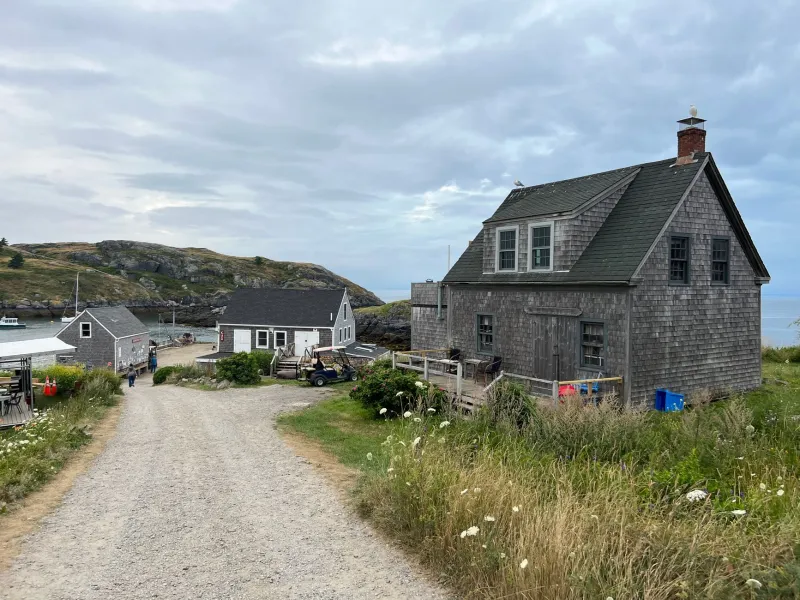
Prohibition enforcement along the Maine coast presented federal agents with an almost insurmountable challenge. The shoreline between Kittery and Kennebunkport is a labyrinth of inlets, tidal creeks, and rocky promontories that had sheltered smugglers long before the Volstead Act was ever conceived. Ogunquit, positioned at the mouth of the Ogunquit River with easy access to the open Atlantic, occupied a particularly advantageous position in the regional bootlegging network.
Local oral histories preserved in the museum's collection describe vessels arriving under the cover of darkness, offloading Canadian whiskey and rum from the Caribbean into shallow-draft dories that could navigate the river's upper reaches without attracting notice. The goods moved quickly from the water's edge into the cellars of certain rooming houses, fish shacks, and at least one establishment that maintained a perfectly respectable tea room on its ground floor. The geography was not incidental to this enterprise — it was its engine.
The Social Architecture of the Speakeasy
What distinguished Ogunquit's underground drinking establishments from the rougher blind pigs of industrial cities was their clientele. By the early 1920s, the town had already established itself as a destination for artists, writers, and the prosperous vacationers drawn by the Ogunquit Art Colony's growing reputation. These were not men and women accustomed to deprivation, and they brought with them expectations that a simple mason jar of home-distilled spirits could not satisfy.
The result was a surprisingly sophisticated underground hospitality culture. Accounts gathered from descendants of early twentieth-century residents describe establishments where proper glassware was maintained, where certain preparations — gin rickeys, whiskey sours, rudimentary versions of what we would today recognize as craft cocktails — were offered with something approaching pride. The men and women who operated these spaces understood that their guests expected not merely alcohol but an experience, a sense of occasion that the law had attempted to extinguish but had only driven indoors.
This marriage of necessity and aspiration produced something durable. The skills of improvisation, of working with irregular and sometimes unreliable supply chains, of creating atmosphere in constrained circumstances — these were lessons that would outlast Prohibition itself.
The Networks Behind the Negronis
No speakeasy operates in isolation. Ogunquit's underground drinking culture depended upon a web of relationships that extended far beyond the town's borders. Local fishermen who supplemented their incomes through rum-running maintained connections with suppliers in Nova Scotia and Newfoundland. Certain York County sheriffs were, according to historical accounts, considerably more interested in the contents of their own glasses than in the contents of any suspect cellar. Hoteliers and boarding house operators who publicly deplored the demon drink were, in several documented instances, quietly accepting deliveries through their kitchen entrances.
This network was not merely transactional. It created bonds of mutual dependence and shared risk that cut across the class distinctions that otherwise defined Ogunquit's social landscape. The fisherman who delivered the bottle and the artist who uncorked it occupied, for the duration of the transaction, a position of genuine equality. Prohibition, paradoxically, democratized certain corners of Ogunquit's social world in ways that the repeal of Prohibition would not entirely undo.
Repeal and Reinvention
When the Twenty-First Amendment restored legal alcohol sales in December 1933, Ogunquit's drinking culture did not simply emerge blinking into the light, unchanged. The years of underground operation had altered it in ways both practical and philosophical. Certain establishments that had operated covertly during Prohibition transitioned with remarkable smoothness into licensed premises — a transition that was perhaps less surprising to local observers than it might have appeared to outsiders.
More significantly, the Prohibition era had established a template for how drinking establishments in Ogunquit would position themselves. The emphasis on atmosphere, on the quality of the preparation rather than merely the availability of the product, on the creation of a social space that offered something beyond simple intoxication — these were values that had been cultivated in necessity and would be refined in legitimacy.
The cocktail lounges and inn bars that characterized Ogunquit's hospitality scene through the middle decades of the twentieth century drew, consciously or not, on this inheritance. The names changed, the addresses were no longer whispered, but the underlying philosophy — that a drink well-made in a room thoughtfully designed for the purpose was a form of genuine hospitality — persisted.
From Underground to Artisanal
The contemporary craft cocktail movement, which took hold in Ogunquit as it did in coastal resort communities across New England during the early 2000s, might appear at first glance to represent a clean break with this history. The language of the modern bar program — house-made syrups, locally foraged botanicals, historically informed recipes drawn from pre-Prohibition bartending manuals — seems to belong to a different era entirely.
And yet the continuities are striking. The premium placed on craft, on provenance, on the story behind the glass — these values echo with remarkable fidelity the ethos of those interwar establishments where a proper drink was understood to be worth the considerable risk of its preparation. The modern bartender who sources his bitters from a small-batch producer in Portland and his vermouth from a Vermont distillery is operating within a tradition of deliberate, even defiant quality that Ogunquit's Prohibition-era operators would have recognized immediately.
The underground networks of the 1920s did not simply supply a thirsty town. They cultivated a sensibility — an insistence that the experience of drinking deserved care and intention — that has proven extraordinarily resilient. The cellars are empty now, the knock codes long forgotten. But the philosophy they harbored endures in every carefully constructed cocktail list that greets visitors to Ogunquit today.
Preserving the Record
The Ogunquit Heritage Museum continues to gather oral histories, photographs, and documentary evidence related to the town's Prohibition-era past. If your family has stories, artifacts, or records connected to this period of local history, we invite you to contact our curatorial staff. The full account of how Ogunquit's underground drinking culture shaped its modern identity remains a story still being assembled, one memory at a time.