Mortar, Memory, and Determination: The Quiet Campaign to Rescue Ogunquit's Gilded-Era Estates
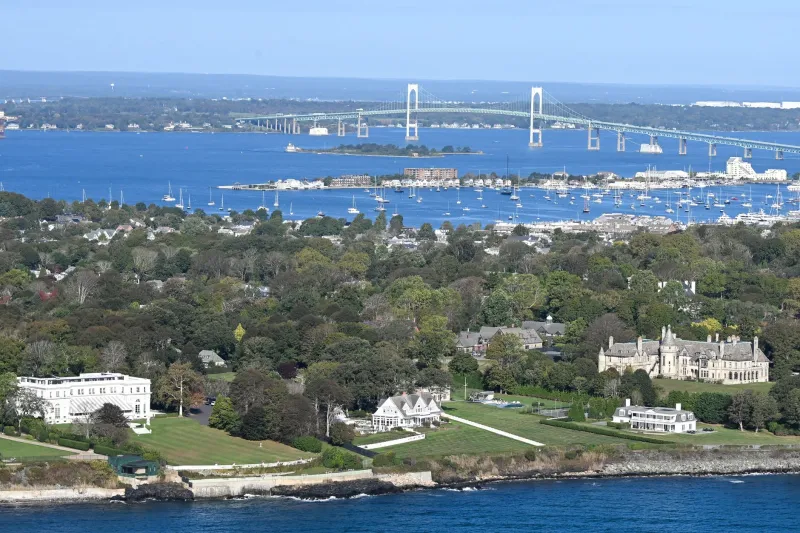
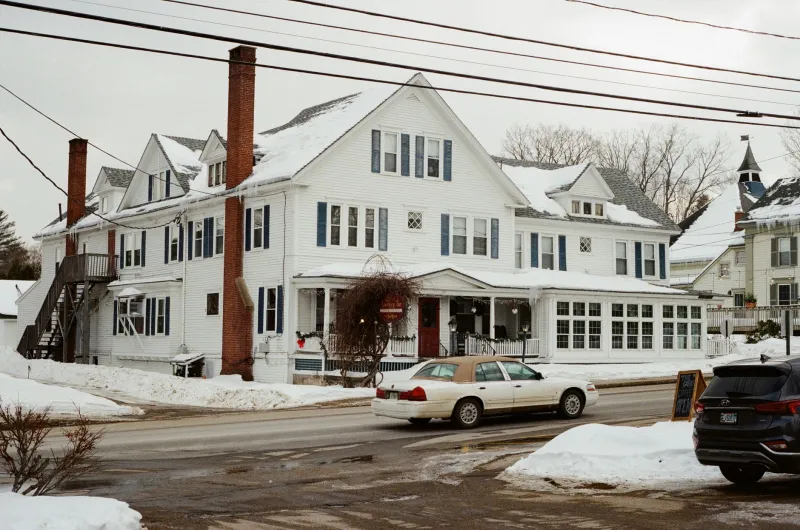
Along the winding lanes that thread through Ogunquit's oldest neighborhoods, certain houses announce themselves with a particular kind of authority. Turrets rise above the tree line. Wraparound porches, their balusters weathered to a soft silver, extend toward gardens long since gone to seed. Decorative gingerbread trim, intricate as lacework, clings to eaves in various states of distress. These are the Victorian-era estates that once welcomed the prosperous elite of America's Gilded Age, and today they occupy a precarious position — magnificent enough to inspire admiration, yet fragile enough to disappear within a generation if nothing is done.
The Ogunquit Heritage Museum has long regarded these structures as irreplaceable documents of local history, as worthy of careful study as any manuscript or artifact housed behind glass. What follows is an account of the people, the obstacles, and the discoveries that define one of coastal Maine's most consequential preservation battles.
The Architecture of Aspiration
To understand what is at stake, one must first appreciate what these buildings represented at the height of their glory. Beginning in the 1870s and accelerating through the turn of the twentieth century, Ogunquit attracted a particular class of summer visitor — textile magnates from Massachusetts, shipping merchants from Boston, and prosperous professionals from as far south as Philadelphia. For these individuals, a summer estate in Maine was both a refuge from urban heat and a declaration of social standing.
The architectural styles they favored reflected national trends filtered through local materials and craftsmanship. Queen Anne structures dominated, characterized by asymmetrical facades, steeply pitched roofs, and an almost theatrical accumulation of decorative detail. Shingle-style cottages, a distinctly American idiom popularized in the Northeast during the 1880s, appeared in abundance, their undulating cedar-shingle surfaces aging gracefully in the salt air. A smaller number of Italianate and Second Empire examples added further variety to the streetscape.
Local builders, many of them descended from the same families who had constructed Ogunquit's fishing vessels and commercial wharves, executed these commissions with considerable skill. The result was a built environment that merged high Victorian ambition with the pragmatic ingenuity of Maine craftsmanship — a combination that makes these structures architecturally distinctive even by the standards of New England's rich historic building stock.
Decades of Decline
The forces that undermined these estates were neither sudden nor dramatic. The Great Depression curtailed the resources of many families who had maintained seasonal properties. World War II drew attention and capital elsewhere. The postwar democratization of leisure travel shifted tourism patterns, and properties that had once housed a single wealthy family began to be subdivided into rental units or converted to small inns, often without the care their construction deserved.
Deferred maintenance compounded over decades. Salt-laden coastal air accelerated the deterioration of wood, metal, and masonry alike. Roofing systems failed, admitting moisture that silently undermined structural timbers. Original windows, many of them featuring hand-blown glass with its characteristic subtle distortions, were replaced with aluminum units that reduced heating costs but stripped buildings of their visual character. In the most severe cases, neglect progressed to the point where stabilization alone represented a formidable engineering challenge.
By the early 2000s, local historians and concerned residents had begun to document the losses with a growing sense of urgency. Several prominent examples had already been demolished, their lots redeveloped or simply left vacant. Others stood at the threshold of irreversibility, their structural conditions deteriorating faster than any informal volunteer effort could address.
The Preservationists Step Forward
The organized response took shape gradually, drawing together an unlikely coalition of architects, historians, local business owners, and longtime residents whose attachment to these buildings was as much emotional as intellectual. Preservation advocacy organizations at the state level, including Maine Preservation, provided technical guidance and helped connect local efforts to broader networks of expertise and funding.
At the heart of many individual restoration projects are the property owners themselves — a varied group whose motivations range from deep personal connection to a recognition that restored historic structures anchor property values and community identity alike. Several owners have spoken candidly about the financial strain involved. Unlike new construction, historic restoration demands patience, specialized labor, and a tolerance for unexpected discoveries within walls and beneath floors.
Funding has arrived through multiple channels. The federal Historic Tax Credit program, which offers a twenty percent credit against qualified rehabilitation expenditures for income-producing historic properties, has proven instrumental in several projects. Maine's own historic preservation tax credit has supplemented federal support. Private philanthropy, including gifts from individuals with family connections to Ogunquit's summer colony, has filled gaps that public programs could not.
What the Walls Reveal
Perhaps the most arresting aspect of these restoration campaigns is what they uncover. When workers carefully removed deteriorated plaster from the parlor walls of one prominent Shore Road estate, they exposed layers of original wallpaper — a vivid document of changing tastes across more than a century of occupancy. Botanical patterns in deep jewel tones gave way to the muted geometrics of the Arts and Crafts period, then to the stripped-down surfaces of the mid-twentieth century. Each layer told a story about the people who had lived within those rooms and the cultural moment they inhabited.
In another property, the removal of a later-added partition revealed an original built-in sideboard of extraordinary craftsmanship, its carved details intact beneath decades of paint. Architectural salvage specialists identified the work as consistent with a particular regional cabinetmaking tradition, adding a footnote to the broader history of Maine decorative arts.
Documents, photographs, and ephemera have also surfaced during restoration work — household accounts, correspondence, and even a cache of postcards depicting Ogunquit scenes from the early 1900s. These materials, donated to the museum's collections, enrich the historical record in ways that no amount of archival research alone could achieve.
A Community Conversation
Preservation is never purely a technical enterprise; it is always, at its core, a conversation about values. Ogunquit's restoration advocates have engaged that conversation directly, hosting public forums, partnering with local schools, and working with the museum to present exhibitions that contextualize these buildings within the town's larger history.
Not every voice in the community has been uniformly enthusiastic. Some residents have raised legitimate questions about the economics of preservation in a coastal real estate market where development pressure is intense. Others have pointed out, with equal legitimacy, that the history embodied in these estates is not a neutral one — that the wealth which built them derived from industrial systems whose costs were borne by others far from Ogunquit's pleasant shores.
These are productive tensions, and the museum regards them as such. A full accounting of what these buildings meant, and what they continue to mean, requires engaging with complexity rather than retreating into uncritical celebration.
The Work Continues
Several major restoration projects are currently underway or in active planning, representing a collective investment of both capital and conviction. The outcome of these efforts will determine whether future generations of Ogunquit residents and visitors encounter a built landscape that retains its historic depth or one diminished by irreversible loss.
The stakes are high, and the preservationists know it. Every restored cornice, every stabilized foundation, every carefully matched shingle represents a small victory against entropy and indifference. Taken together, these victories constitute something larger: the ongoing assertion that the physical fabric of the past is worth fighting for, that the stories held within old walls deserve to be heard, and that a community willing to do the difficult work of preservation is one that understands its own identity with unusual clarity.
The Ogunquit Heritage Museum remains committed to documenting, supporting, and celebrating these efforts — because the history of this coast is not only what happened here, but what we choose to remember.